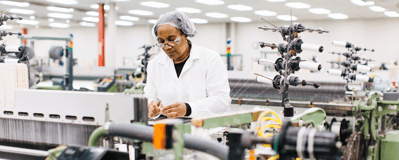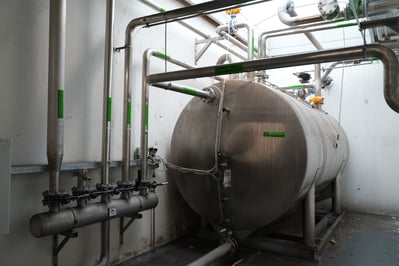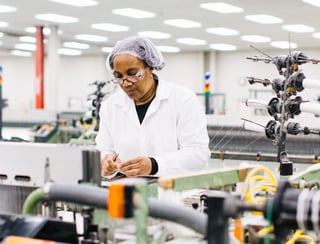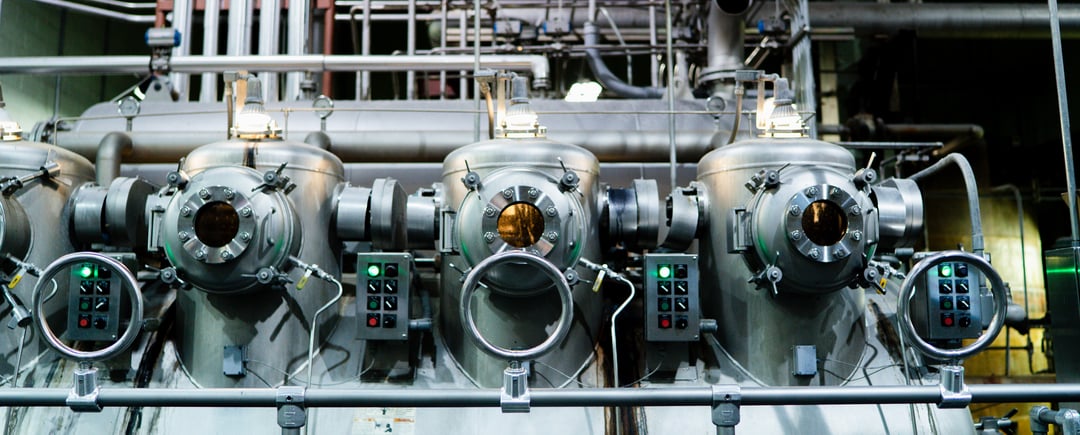
At TenCate Protective Fabrics, we recognize that energy efficiency is an essential part of reducing the environmental impact of textile production. In 2024, we invested approximately $2.4 million in key upgrades to our tenter frame line in our Molena, Georgia, Dyeing and Finishing plant, a critical step in our finishing operations that enables us to deliver durable performance attributes—such as water repellency, abrasion resistance, and dimensional stability—to our protective fabrics.
A tenter frame is a complex system that supports the curing process. Wet-dyed fabric is unwound and passed through a treatment bath, followed by controlled drying. The fabric is then heat-cured in an oven to activate chemical finishes, dried again, inspected, and prepared for shipment. This stage of production is energy-intensive and plays a central role in determining the final quality of our products.
To optimize both energy usage and process performance, we invested in three key upgrades: a new oven, a state-of-the-art de-twister, and variable-speed drives to replace direct-drive systems. The de-twister ensures that fabric enters the tenter frame with minimal distortion, reducing processing errors and enhancing throughput. The new oven delivers consistent heat activation, while the upgraded motors allow greater control over line speed, helping us fine-tune energy consumption in real-time.
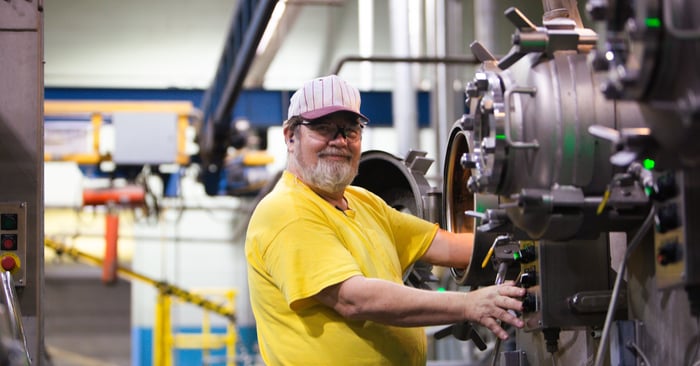
These enhancements result in higher operational efficiency and shorter run times per fabric batch. This means we consume less energy per linear meter of fabric produced. By reducing the time and energy needed to achieve consistent product quality, we minimize our environmental footprint without compromising the performance standards our end users rely on.
This investment reflects our continued focus on practical improvements that align with our broader energy efficiency goals. It’s another example of how we are addressing resource use through tangible upgrades to our manufacturing efficiency infrastructure.